Complete Guide: Training for Posture Corrects Kyphosis and Lordosis
By Tafity — 2/26/2026
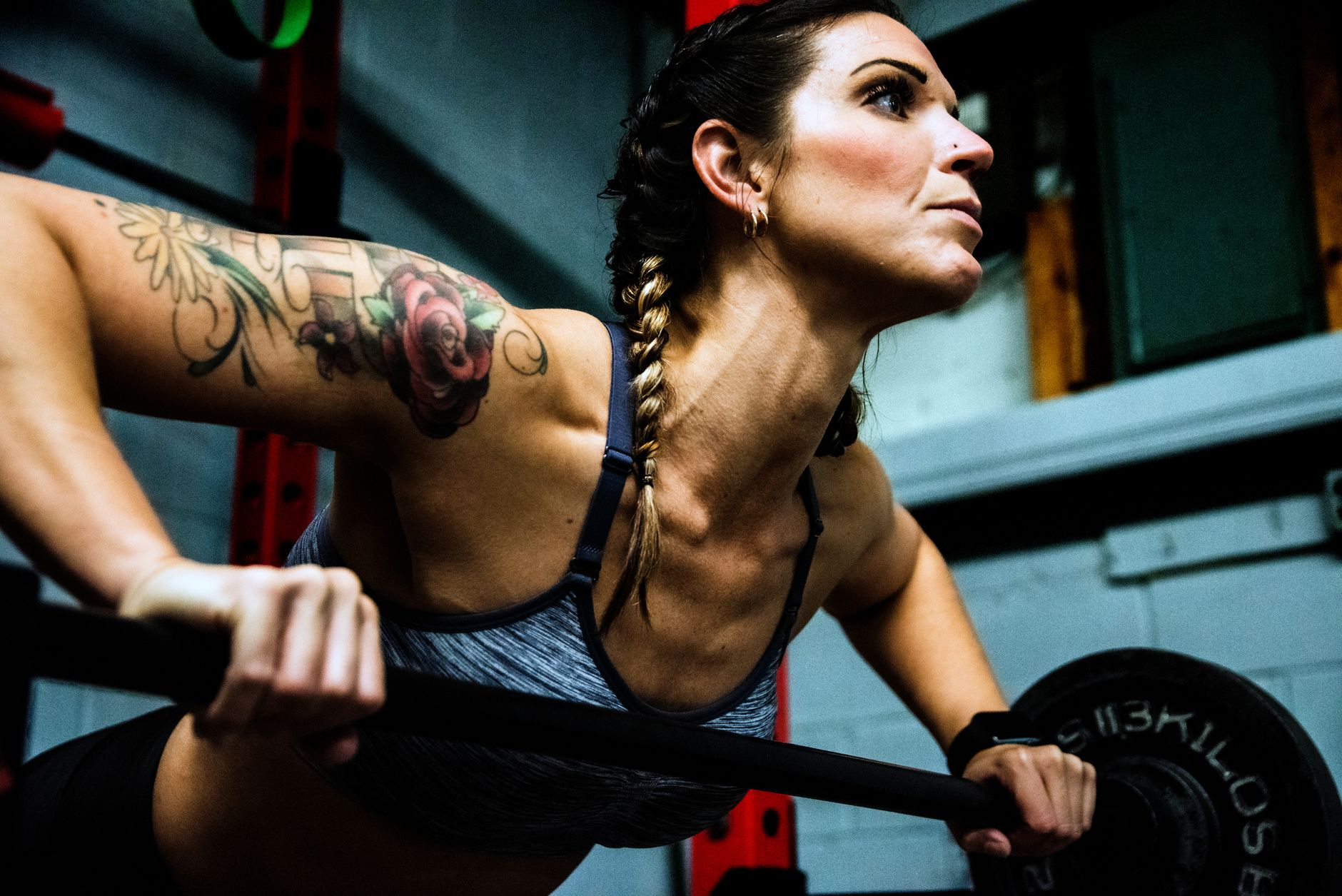
In 2024, after a decade and a half observing and studying the health and fitness of Brazilians, I can confidently state: posture has become the silent pandemic of the century. I'm not talking about a simple aesthetic imbalance, but a problem that drains your energy, accentuates chronic pain, and even impacts your breathing and mood. Do you remember the last time you sat up with your spine straight, effortlessly, or walked without your shoulders naturally slumping forward? For many, that's a distant memory. That's why I've prepared this **complete guide: posture training: exercises that correct kyphosis and lordosis**, a detailed compass to restore your body's architecture and, consequently, your quality of life.
Imagine the scene: a 28-year-old programmer spent **12 hours a day** hunched over his keyboard. His thoracic kyphosis (that hunchback many know) was so pronounced he looked like a question mark. Beyond the constant pain, shame about his appearance, and inexplicable fatigue limited his social and professional life. But with a posture-focused training plan, addressing specific exercises for kyphosis and lordosis, in **just 6 months**, he not only significantly reduced the curvature but also eliminated pain and, crucially, regained the self-confidence to face the world head held high. Stories like this are the fuel that drives me, and it's precisely this methodology we will explore here.
## The Silent Enemy: Understanding Pathological Kyphosis and Lordosis
Before diving into the exercises, it's crucial you understand what's happening with your body. The spine is a masterpiece of engineering, with natural curves that act like springs, absorbing impact and distributing weight. There are, indeed, physiological – meaning normal and desirable – thoracic kyphosis (outward curve in the upper back) and lumbar lordosis (inward curve in the lower back).
The problem arises when these curves become **exaggerated** due to poor postural habits, muscle weakness, imbalances, or, in some cases, genetic conditions or diseases. This is what we call pathological kyphosis or lordosis. A study published in the *Spine Journal* in **2018** with **3,500 participants** showed a direct correlation between pronounced thoracic kyphosis and decreased lung function and increased risk of vertebral fractures in the elderly. It's not just an aesthetic issue; it's a vital health issue.
> "Body posture is a direct reflection of our lifestyle and an important predictor of musculoskeletal health. Ignoring it is neglecting a fundamental pillar of well-being." – Dr. Ricardo Paes, Physical Therapist and Posture Specialist.
### Kyphosis: More Than Just a Hunch
Pathological kyphosis is characterized by an excessive forward curvature of the thoracic spine, giving the appearance of **rounded shoulders** and a head jutting forward. The most common causes in adults include: **prolonged sitting posture** (especially with excessive cell phone and computer use), weakness of the back muscles, aging (osteoporosis can lead to vertebral compression fractures), and conditions like Scheuermann's Disease.
Symptoms go beyond aesthetics: chronic pain in the cervical and thoracic regions, stiffness, difficulty breathing deeply, nerve compression, and even digestive problems can arise. When you have pronounced kyphosis, your pectoral muscles tend to shorten, while your back muscles lengthen and weaken. It's a vicious cycle of imbalance. This is one of the main focuses of this **complete guide: posture training: exercises that correct kyphosis and lordosis**.
### Lordosis: The Dangerous Curve of the Lower Back
Pathological lordosis, in turn, is a marked increase in the inward curve of the lumbar spine. It's often mistakenly associated with a "prominent butt," but in reality, it can be a sign of **severe muscle imbalance**. Factors contributing to excessive lordosis include: **abdominal weakness**, shortened hip flexor muscles (if you spend a lot of time sitting, you likely have them), obesity (especially increased visceral fat, which can be combated with practices from [How to Lose Visceral Fat: The Most Dangerous Fat and How to Get Rid of It](https://tafity.com.br/blog/como-perder-gordura-visceral-a-gordura-mais-perigosa-mm1w9rx8wlw)), pregnancy, and prolonged use of high heels.
Symptoms include persistent lower back pain, stiffness, a feeling of fatigue in the lower back, and in severe cases, can lead to herniated discs. A protruding belly and more prominent buttocks are common visual characteristics. Correcting lordosis isn't just about strengthening the abs but also about stretching and loosening the right muscles and understanding how [Exercises for Those Who Sit All Day: Relieve Pain and Lose Weight](https://tafity.com.br/blog/exercicios-para-quem-trabalha-sentado-o-dia-todo-alivie-dores-emagreca-endomorfo-mm1mnkvyi02) can help.
## Posture Training: The Science of Body Re-education
Make no mistake: correcting posture isn't a button you press. It's a continuous process of neuromuscular re-education that requires dedication and the right type of **posture training**. A systematic review published in the *Journal of Physical Therapy Science* in **2020** concluded that exercise programs focused on core strengthening, scapular muscles, and spinal flexibility are **highly effective** in reducing pathological kyphosis and lordosis, especially when combined with postural awareness.
The secret lies in addressing muscular imbalances: strengthening what's weak and stretching what's tight. In our methodology, we apply the principle of **progressive overload** not just for muscle gain but also to adapt postural muscles to new demands, ensuring the new posture is sustainable. Understanding [Progressive Overload: Uncover the Most Important Principle of Weight Training](https://tafity.com.br/blog/passo-a-passo-sobrecarga-progressiva-o-principio-mais-importante-da-musculacao-mm1pulj7tac) is crucial even for posture correction.
### Fundamental Principles for Effective Posture Training
1. **Body Awareness:** The first step is noticing your current posture. Use mirrors, ask someone to take a side profile photo of you. Feel the position of your head, shoulders, and pelvis. Without this awareness, no exercise will be fully effective.
2. **Strengthening Deep Core Muscles:** The core (abs, lower back, pelvic floor, and diaphragm) is the foundation of everything. A weak core is like building a house on quicksand. Strong muscles in this region support the spine.
3. **Strengthening Upper Back Muscles:** Rhomboids, mid, and lower trapezius are essential for pulling the shoulders back and down, counteracting kyphosis.
4. **Stretching Pectoral and Hip Flexor Muscles:** These muscles tend to shorten in faulty postures, pulling the body forward (pectorals) or accentuating lordosis (hip flexors).
5. **Thoracic Spine Mobility:** A stiff thoracic spine is an invitation to kyphosis. Exercises that promote rotation and extension in this region are crucial.
6. **Diaphragmatic Breathing:** Deep diaphragmatic breathing not only strengthens the core and diaphragm but also helps mobilize the rib cage and thoracic spine, combating stiffness.
## Exercises That Correct Kyphosis: Free Your Shoulders
The following exercises are focused on stretching shortened muscles that pull the shoulders forward and strengthening the muscles that pull them back, promoting a more upright posture.
### 1. Doorway Chest Stretch
This is a classic, but very few do it correctly. Stand in a doorway, with one arm bent at **90 degrees** (elbow at shoulder height) and your forearm resting on the doorframe. Lean your body forward until you feel a gentle stretch in your chest. Hold for **30 seconds** and repeat **3 times** on each side. The trick is to keep your shoulders down and back, not letting them rise towards your ears. This stretches the pectorals, which are often tight in people with kyphosis.
### 2. Band Pull-Aparts (or Dumbbell Rows)
Secure a resistance band to a fixed point in front of you at waist height (or use a light dumbbell). Sit on the floor with legs extended and knees slightly bent. Keep your spine neutral and pull the band towards your chest, feeling your shoulder blades (the "wings" on your back) squeeze together. Focus on contracting your rhomboids and lower trapezius. Perform **3 sets of 12-15 repetitions**, controlling the movement in and out. This exercise strengthens the muscles that pull the shoulders back.
### 3. Foam Roller Thoracic Extension
Lie on your back over a foam roller, positioned perpendicularly at the height of your upper back (between your shoulder blades). Place your hands behind your head for neck support. Relax your body over the roller, allowing gravity to open your chest and extend your thoracic spine. You can perform small extensions and flexions, slowly rolling your torso over the roller. Do this for **1-2 minutes**. This improves thoracic spine mobility, essential for combating kyphosis.
### 4. Y-T-W with Mini-Band or No Weights
Lie face down on the floor, with your arms extended forward, forming a 'Y' with your body. Lift your arms a few inches off the floor, squeezing your back muscles. Hold for **2 seconds**, then return. Then, do the same, forming a 'T' (arms open to the sides), and finally, a 'W' (elbows bent, forming a W with your arms at your sides). Perform **2-3 sets of 10-15 repetitions** for each letter. These movements activate the scapular stabilizing muscles.
## Exercises That Correct Lordosis: Stabilize Your Lower Back
For lordosis, the focus is on strengthening the abs and glutes, stretching the hip flexors, and teaching the pelvis to maintain a neutral position.
### 1. Plank
Classic and effective. Support yourself on your forearms and toes, keeping your body straight like a board, without letting your hips sag or rise too much. Contract your abs and glutes. The goal is to maintain this straight line, without accentuating the lumbar curve. Start with **30 seconds** and progress to **1 minute or more** for **3 sets**. The plank strengthens the core isometrically, crucial for lumbar spine stability.
### 2. Glute Bridge
Lie on your back with your knees bent, feet flat on the floor hip-width apart. Lift your hips off the floor, squeezing your glutes, until your body forms a straight line from your shoulders to your knees. Hold for **2 seconds** at the top and lower slowly. Perform **3 sets of 12-15 repetitions**. This exercise strengthens the glutes, which are often weak in individuals with lordosis, helping to stabilize the pelvis.
### 3. Hip Flexor Stretch (Kneeling)
Kneel with one leg forward (in an L-shape), as if proposing marriage. Keep your torso upright and tuck your hips forward, feeling a gentle stretch in the front of your thigh of the back leg. Hold for **30 seconds** and repeat **3 times** on each side. Tight hip flexors pull the pelvis forward, accentuating lordosis. This stretch is vital for releasing this muscle group.
### 4. Dead Bug
Lie on your back with your arms extended towards the ceiling and your legs bent, forming a 90-degree angle at your knees and hips. Simultaneously, extend your right arm and left leg, bringing them towards the floor but without touching. Keep your lower back pressed firmly into the floor throughout the movement. Return to the starting position and alternate sides. Perform **3 sets of 10-12 repetitions per side**. This exercise challenges core stability without overstressing the lower back, teaching you to maintain a neutral spine.
## Integrating Posture Training into Your Routine: A Success Story
Marina, a 35-year-old designer, had suffered from chronic neck and lower back pain since college. Her kyphosis was evident, and her lordosis pronounced. She believed heavy workouts would worsen her condition. But by consistently applying the principles of this **complete guide: posture training: exercises that correct kyphosis and lordosis**, with just **20 minutes, 3 times a week**, she saw a radical change.
In the first few months, the focus was on postural awareness and light exercises for mobility and core muscle activation. Gradually, we introduced stretching and strengthening exercises. In **8 months**, Marina not only felt taller and experienced less pain but also reported improved self-esteem and concentration at work. She understood that the **secret isn't initial intensity, but consistency**.
### Essential Tips for Success
* **Start Slowly:** Don't try to do everything at once. Progression is key. Quality of movement surpasses quantity.
* **Prioritize Form:** Performing each exercise with correct technique is more important than lifting more weight or doing more repetitions. If you have doubts, record yourself or seek professional guidance.
* **Consistency Over Intensity:** It's better to do 15 minutes of postural exercises every day than an hour once a week. Your body needs regular stimuli.
* **Ergonomics at Home/Work:** Adjust your chair, monitor, and keyboard. Small changes in your workstation or study area can have a significant impact. Invest in a good ergonomic chair if possible.
* **Active Breaks:** If you work sitting down, get up and walk for **5 minutes** every hour. Do some light stretches. Movement is the antidote to stiffness. For more tips, see our article [Exercise Microdosing: Relieve Hypertension in Small Doses](https://tafity.com.br/blog/microdosing-exercicio-treinar-pouco-varias-vezes-dia-hipertensos-mm3i3x5zb6n).
* **Hydration and Nutrition:** Stay well-hydrated. Water is essential for the health of your intervertebral discs. A balanced, nutrient-rich diet also supports bone and muscle health. For more dietary insights, check out [The Science of Satiety: Foods That Keep You Fuller for Longer](https://tafity.com.br/blog/ciencia-da-saciedade-alimentos-que-matam-fome-mais-tempo-mlqwvn5cmnv).
## Frequently Asked Questions about Posture Training
### Can kyphosis and lordosis be definitively cured with exercises? (FAQ)
Pathological kyphosis and lordosis can be significantly corrected and managed with specific exercises and persistence, although a definitive cure depends on the underlying cause. In many cases, especially those arising from poor postural habits, improvement is notable and long-lasting, but ongoing maintenance is essential to preserve the results.
### Is it normal to feel pain during posture exercises? (FAQ)
Feeling a mild discomfort or stretch is normal and indicates that the muscles are being worked or stretched. However, sharp pain, stabbing sensations, or pain that persists after exercise is not normal and may indicate incorrect execution or an underlying condition that needs medical or physical therapy evaluation.
### How long does it take to see results from posture exercises? (FAQ)
The first results in terms of pain relief and increased body awareness can be noticed in **4 to 6 weeks**. Visible changes in curvature and postural stability generally take **3 to 6 months** of consistent practice, although the timeline can vary individually depending on the severity and dedication.
### Can I do these exercises every day? (FAQ)
Yes, many postural exercises are low-intensity and can be performed daily or every other day, depending on how your body responds. The ideal is to listen to your body and allow for rest days if necessary, or focus on different muscle groups each day.
### Do I need any special equipment for this training? (FAQ)
Most exercises can be done with just bodyweight. However, having a resistance band or mini-band and a foam roller can optimize and expand your exercise options, making the training more complete. These items are low-cost and easily found.
### Is it possible to correct my posture on my own, or do I need a professional? (FAQ)
With a **complete guide: posture training: exercises that correct kyphosis and lordosis** like this one, you can begin a self-correction process. However, for more severe cases, persistent pain, or if you have doubts about correct execution, the guidance of a physical therapist or specialized fitness professional is highly recommended for a personalized and safe plan.
## Your Posture, Your Ally: An Invitation to Transformation
We've reached the end of this **complete guide: posture training: exercises that correct kyphosis and lordosis**, but the journey of transforming your posture is just beginning. Remember, your spine is the axis of your body, the support that keeps you upright, enables your movements, and protects your nervous system. Neglecting it is neglecting your own vitality.
Don't let poor posture steal your energy, your confidence, or your function. Start today. Small, consistent steps add up to big leaps. Feel the difference of an aligned body, breathing better, living without unnecessary pain. Believe it: your body has the capacity to readjust and strengthen itself. Give it the right tools, and it will respond with a new, stronger, and more upright version of you.
---
## 🎬 Recommended Video
**How to Correct a Hunchback: The Best Exercises for Hyperkyphosis - Leandro Ribeiro**. by *Leandro Ribeiro | Trainer*